
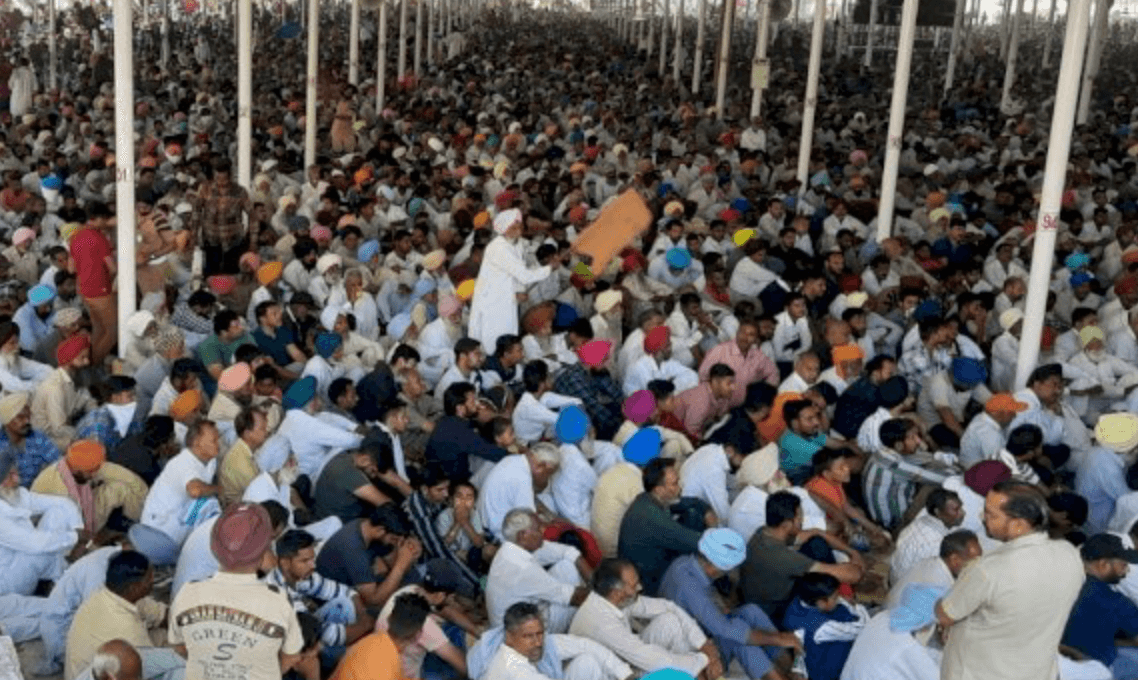
Dera Sacha Sauda Chief Gurmeet Ram Rahim Singh, who is serving a 20-year jail term for raping two of his female disciples, was released on another 21-day parole, making it his 17th furlough since 2020.
Ram Rahim, who is serving his sentence in Sunaria jail in Haryana, has been allowed to stay at Dera's Baghpat ashram during his temporary release. His repeated releases, particularly near times of electoral importance, have often drawn criticism from opposition parties, who have alleged that the Dera chief's influence is being used for electoral gains.
In fact, while taking exception to Ram Rahim's seventeenth release in the last five years, Jathedar (head priest) of Akal Takht, the highest seat of authority among Sikhs, said that those jailed for heinous crimes like rape were being released "frequently" as if they were on a "picnic" while Bandi Singhs, who have completed their sentences, are not being released from jails.
Bandi Singhs refer to Sikh prisoners who were convicted on charges of militancy during Punjab's insurgency from the 1980s to the 1990s.
The latest temporary release of the Dera Sacha Sauda chief has once again underlined the political influence of deras in Punjab. But the importance of deras in Punjab politics goes well beyond Ram Rahim.
Deras in Punjab are socio-religious groups led by a living guru.
For decades, political parties across the spectrum have cultivated these religious and socio-spiritual institutions because of their ability to mobilise tightly knit communities of followers. The influence is particularly significant in a state where caste and religion continue to influence electoral behaviour.
There are several prominent deras with political influence in Punjab. Dera Sacha Sauda, headquartered in Sirsa in neighbouring Haryana, has a substantial following in Punjab's Malwa region, which accounts for nearly half of the state's 117 Assembly constituencies. Dera Sachkhand Ballan has considerable influence among the Ravidassia community in the Doaba region, while Radha Soami Satsang Beas commands a large following across Punjab.
The attraction for political parties is straightforward, as deras offer access to organised communities that can be difficult for conventional political campaigns to reach individually.
A 2014 study by Panjab University political scientist Ashutosh Kumar found that many Dera followers belonged to socially and economically marginalised communities.
Political parties, he argued, were increasingly cultivating Deras because they provided a route to mobilise these communities electorally. The phenomenon, according to Kumar, reflected the continuing dominance of upper-caste groups in Punjab's political power structure and the difficulty political parties faced in directly mobilising marginalised voters.
This is one reason Deras have acquired an importance that extends beyond religion. For many followers, besides providing spiritual guidance, deras also create a sense of community, social support and belonging among people largely sidelined by society. Some deras run schools, hospitals, charitable institutions and other welfare activities, creating networks that are far more deeply embedded among people than a conventional political organisation.
That makes them attractive to politicians, particularly in closely contested elections.
Dera Sacha Sauda's political history illustrates this most clearly. The Dera backed Congress in the 2007 Punjab Assembly election and later supported the Akali-BJP combine in 2017. Its political preference has therefore not been tied permanently to one party. Instead, different political groups have sought its support when they believe its followers could influence closely fought constituencies.
But the relationship is not without risks.
The overt political involvement of deras can escalate existing religious and caste tensions. Take the example of the 2007 confrontation between Dera Sacha Sauda followers and supporters of the Shiromani Akali Dal, which eventually became a major social conflict in Punjab.
Academic research has subsequently pointed to the danger that political participation by religious deras can turn political competition into wider social conflict.
Not all Deras, however, openly issue political directives. Radha Soami Satsang Beas, for instance, does not publicly announce support for a particular political party. But its enormous following makes it a regular destination for politicians seeking an audience or the symbolic legitimacy associated with a meeting with its leadership.
That explains why deras continue to matter even when they insist that they are not political organisations.
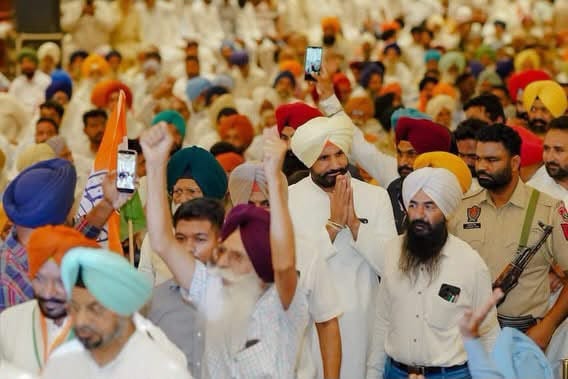
Punjab is heading towards another Assembly election in a few months, and the competition for these networks has already begun. Political leaders are once again visiting dera heads, seeking blessings and cultivating relationships with institutions that can influence large sections of the electorate.
In February, Prime Minister Narendra Modi also visited Jalandhar's Dera Sachkhand Ballan, one of the most influential Deras among the Ravidassia community, in a high-stakes outreach in Punjab's Dalit heartland. But Modi's visit wasn't without optics.
The Doaba region, with Jalandhar as its centre, has about 45 percent Dalit population, well above Punjab's overall 32 percent, which in itself is the highest among all states. Of Punjab's 117 Assembly seats, around 23 seats fall in the Doaba region. The Dera Sachkhand Ballan is believed to have an electoral influence in at least 19 of these seats, making the political significance of deras difficult for even PM Modi to ignore.
As Punjab heads to the polls once more early next year, political parties continue to court deras because their support still matters for votes. More than any formal political alliance these Deras are again at the centre of Punjab's politics.

Comments (0)