

When the Congress party recorded its worst assembly election tally in twenty-five years in the 2022 Punjab Assembly election, Jasbir Singh Gill, the party’s former Member of Parliament, lashed out at the Congress and blamed the party for its defeat.
“Infighting, indiscipline, tickets for notes, workers’ disenchantment, inflated ego and arrogance of leaders have mauled Congress in Punjab,” tweeted Jasbir Singh Gill, former Member of Parliament from Khadoor Sahib constituency.
Almost four years later, with Punjab just seven months away from another assembly election, little appears to have changed. As other major political parties work to consolidate their positions, Congress once again finds itself consumed by factional rivalries, suggesting that the party has still not learned anything from the debacle of 2022 and may well be on the path of another self-inflicted setback.
The latest round of discord began on July 1 when All India Congress Committee (AICC) retained Amrinder Singh Raja Warring as President of Punjab Pradesh Congress Committee (PPCC) for the 2027 assembly elections and former Chief Minister, Charanjit Singh Channi was appointed chairman of the state election campaign. While the central command hoped the appointments would balance competing power centres within the party, it instead spelt disaster.
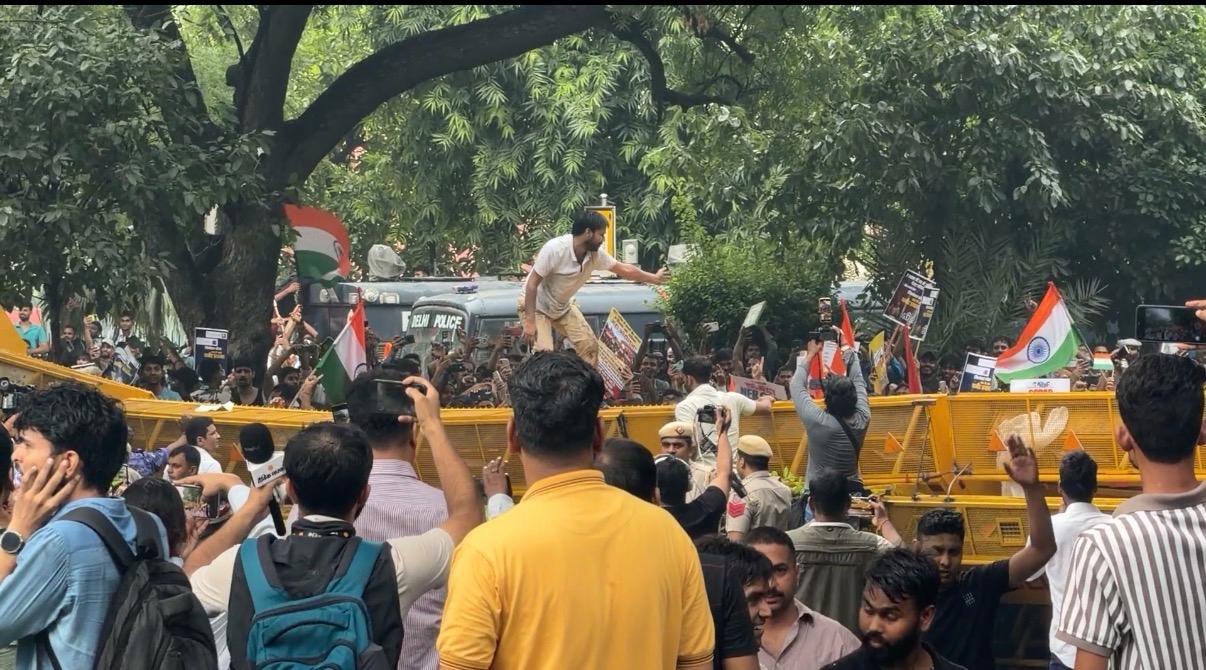
Since then, a section of the party that supports Channi as the Chief Minister candidate has been rigorously demanding that Warring should be replaced as the state unit chief. The infighting turned ugly on August 8, when Warring took a jibe at Channi camp and claimed that “party workers protesting his leadership were RSS agents”.
“The political undercurrents, for now, appear to be favouring the party, but the Congress lacks the cohesiveness and consistency required to leverage its strengths,” wrote senior journalist Gautam Dheer. “Behind the scaffolding that hides the factionalism, the Punjab Congress is a deeply divided house that might not be able to overhaul itself quickly.”
While the two factional camps continue targeting each other vehemently, political observers pointed out to the strife and the leadership crisis within the Congress’s Punjab unit and argued that it may well supplement the winning probability of Aam Aadmi Party (AAP), despite the party losing ground in recent years.
“The public wants Congress to win but Congress itself does not want to win,” Aditya Rathi, political analyst based in New Delhi told The Decifer. “The way AAP has governed Punjab since 2022, its vote share would likely have come down in the upcoming election. But Congress’s infighting could help it secure a relatively comfortable win.”
An unexpected lifeline?
Congress has governed Punjab for nearly 31 years, though not in consecutive terms but most by any political party. But, the AAP wave in the 2022 assembly election swallowed up Congress’ majority, reducing its tally from 77 seats in 2017 to just 18 in 2022. Many party leaders attributed the ravaging defeat to central leadership’s flawed strategy of axing the then Chief Minister and old time Congress hand, Captain Amarinder Singh, who was replaced by Channi. Singh later joined the BJP.
“They’re again falling in the same trap. A recent internal survey within Congress suggested that Channi should replace Warring as the party’s face in Punjab,” claimed Rathi. “But instead, the high command went ahead with Warring. So, it shows a command paralysis within the party that ended up creating a rebellious situation for it.”
AAP, meanwhile, enters the election facing the natural burden of anti-incumbency after five years in office. The party also lost seven Rajya Sabha MPs, led by Raghav Chadha and merged with Bharatiya Janata Party (BJP). Raghav Chadha and Sandeep Pathak were among the principal architects of AAP’s campaign in the previous assembly election and were largely credited for the landslide victory.
“It will hurt AAP significantly in the elections,” explained Dr. Gurmeet Singh, professor of Hindi at Panjab University. “The absence of these MPs also means loss of resources. Take Ashok Mittal’s case. He’s the chancellor of Lovely Professional University. That means the organisational and financial resources that came through him are no longer available to the party. Besides candidates, elections are also fought on resources.”
Adding to its miseries, Akal Takht, the highest temporal authority of Sikhs, has already called Chief Minister Bhawant Mann “Guru dokhi” (anti Sikh Guru) and “Khalsa Panth virodhi” (anti-Sikh religion). The sikh clergymen have also asked for Mann’s boycott by the community.
Ordinarily, under such circumstances, the principal opposition would consciously be in the strongest position to channel public dissatisfaction.
“That should have given the Congress a natural advantage as the principal opposition,” observed an Amritsar based political observer, wishing not to be named. “But as Congress remains consumed by factionalism, it naturally ends up neutralising that advantage. In that sense, its internal divisions could become an unexpected lifeline for AAP.”
According to the observer, Punjab’s election will not be decided solely by AAP’s performance in government but also by whether the Congress can convert anti-incumbency into a credible political alternative. “Every public feud within the Congress weakens that possibility,” explained the observer. “If the opposition appears divided, voters often prefer the stability of the incumbent over the uncertainty of an alternative. That is precisely where AAP gains.”
He added, “In every election, the burden is heavier on the opposition than on the government. The opposition has to convince voters not only that the incumbent has failed but also that it is capable of replacing it. Congress is failing the second test.”
The concurrent situation in Punjab underlines that AAP may not have to recover all the votes it may lose because of anti-incumbency and CM Mann’s controversy. “It only has to ensure that Congress fails to consolidate the anti AAP vote,” added the observer. “Internal factionalism prevents exactly that. It has left many anti-incumbent voters unconvinced that Congress is a viable government in waiting.”
The arithmetic of Punjab’s electoral system also works in AAP’s favour. According to the Association for Democratic Reforms (ADR), 74 percent of winning candidates in the 2022 Assembly election secured less than 50 percent of the votes polled in their constituencies while AAP won 92 seats with an overall vote share of about 42 percent.
In that case, if Congress’s infighting fragments anti-incumbent votes through rebel candidates or weak ground mobilisation, even a modest 2-3 percentage point erosion in the opposition’s vote in closely contested constituencies could disproportionately benefit the ruling party, without requiring AAP to repeat its 2022 landslide win.
Stakes this time
Historically, Punjab has seen political parties recover despite internal strife. Even after its crushing defeat in the 2022 Assembly election, Congress regained some ground in the 2024 Lok Sabha polls, winning seven of the state’s 13 parliamentary seats. But observers say the current crisis within the Punjab Pradesh Congress Committee (PPCC) is different and could hand the ruling AAP an unexpected advantage.
“In earlier episodes of infighting, Jat Sikh leaders competed with one another,” said political analyst Aditya Rathi. “The current conflict is different because Charanjit Singh Channi, as the Congress’s most prominent Dalit leader, commands significant influence among Dalit voters while Raja Warring draws support from sections of the Jat Sikh electorate. That raises the stakes for the Congress because the party risks alienating two of Punjab’s most electorally significant social groups.”
Dalits constitute nearly 32 percent of Punjab’s population–the highest proportion of any Indian state–and are the state’s single largest social group.
“The Congress’s traditional support among Jat Sikhs is already fragmented between the Congress, Shiromani Akali Dal and AAP,” Rathi said. “That makes Dalit support even more critical for the party. If the leadership tussle weakens Channi’s standing or alienates his supporters, Congress risks failing to consolidate that vote, creating an open opportunity for AAP.”
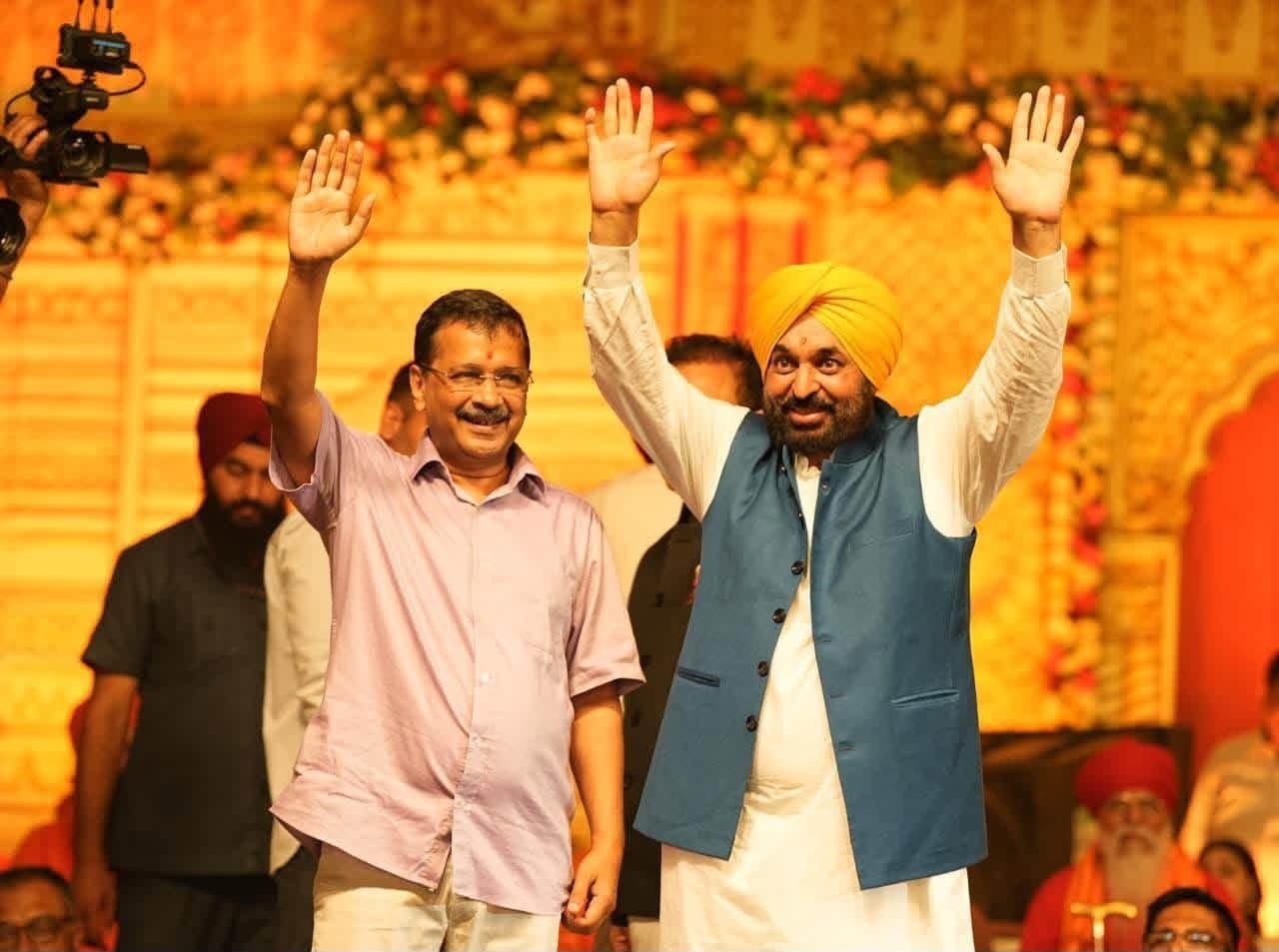
Chief Minister Bhagwant Mann has repeatedly seized opportunity on the divisions, mocking the Congress’s leadership tussles at public rallies and questioning whether a party unable to resolve its own disputes can govern Punjab.
“Congress is rattled,” Bhagwant Mann told the media. “Their infighting is not ending. They are not talking about any issues related to Punjab.”
Crowded contest
While the turmoil within Congress may improve AAP’s electoral prospects, political experts also caution that the 2027 Punjab Assembly election is unlikely to be a straightforward contest between the current dispensation and its principal opposition.
Punjab’s political landscape remains fragmented, with the Shiromani Akali Dal (SAD), Bharatiya Janata Party (BJP) and smaller regional players all seeking to direct electoral outcomes.
The century-old SAD has traditionally been regarded as the principal custodian of Sikh or Panthic politics in Punjab and remained one of the state’s dominant political forces for decades. However, in recent years, the party has witnessed a drastic erosion of its electoral influence, creating space for both AAP and BJP to expand their footprints.
Meanwhile, BJP has been strengthening its organisation in Punjab ever since its alliance with SAD ended in 2020. Prime Minister Narendra Modi and Union Home Minister Amit Shah have repeatedly campaigned in the state while the party has consistently signalled its willingness to contest all 117 Assembly seats on its own. The party also hopes to broaden its appeal beyond its traditional urban Hindu voter base and become a stronger force in Punjab.
“BJP was the junior partner in Haryana but it still managed to win the 2024 Assembly election on its own,” said Gurmeet Singh, the Hindi professor. “Punjab presents a different challenge. Anti-BJP sentiment is relatively stronger here, driven largely by the farmers’ agitation and religious identity. Historically, Punjab has never been particularly fertile ground for BJP.”
But Singh believes that BJP has shown in states like West Bengal that it is willing to pursue a long-term organisational strategy. “It may not be a major force in Punjab today but given its history of attracting defections and the recent exits from AAP, it is possible that, if the Congress’s internal strife continues, more leaders could eventually gravitate towards BJP and strengthen its electoral position.”
However, BJP’s expansion may produce an unintended consequence in the short term.
“In the immediate election, every additional opposition player complicates the arithmetic for Congress more than it does for AAP,” said the earlier mentioned Amritsar based political observer. “If anti-incumbent votes are divided between Congress, BJP and SAD, the ruling party stands to benefit from that fragmentation.”
While major political parties may directly influence the contours of Punjab elections next year, the presence of Waris Punjab De could also shape the course of elections.
However, observers believe that despite the fragmentation across Punjab’s politics, Congress’s performance in the 2024 Lok Sabha election should have made it the natural contender to the ruling AAP in the 2027 Assembly election.
“But the current strife has squandered much of that advantage,” said Gurmeet Singh. “It has weakened the Congress at a time when it should have been consolidating itself as the principal opposition. Whether the biggest beneficiary turns out to be AAP, BJP or Waris Punjab De remains to be seen.”
As almost every major political party in Punjab is fighting its own demons, it remains to be seen if the cumulative effect could ultimately help Aam Aadmi Party retain power or not and whether the 2027 assembly elections create an opportunity for BJP to make inroads in a state that has largely kept it at the margins.

Comments (0)