
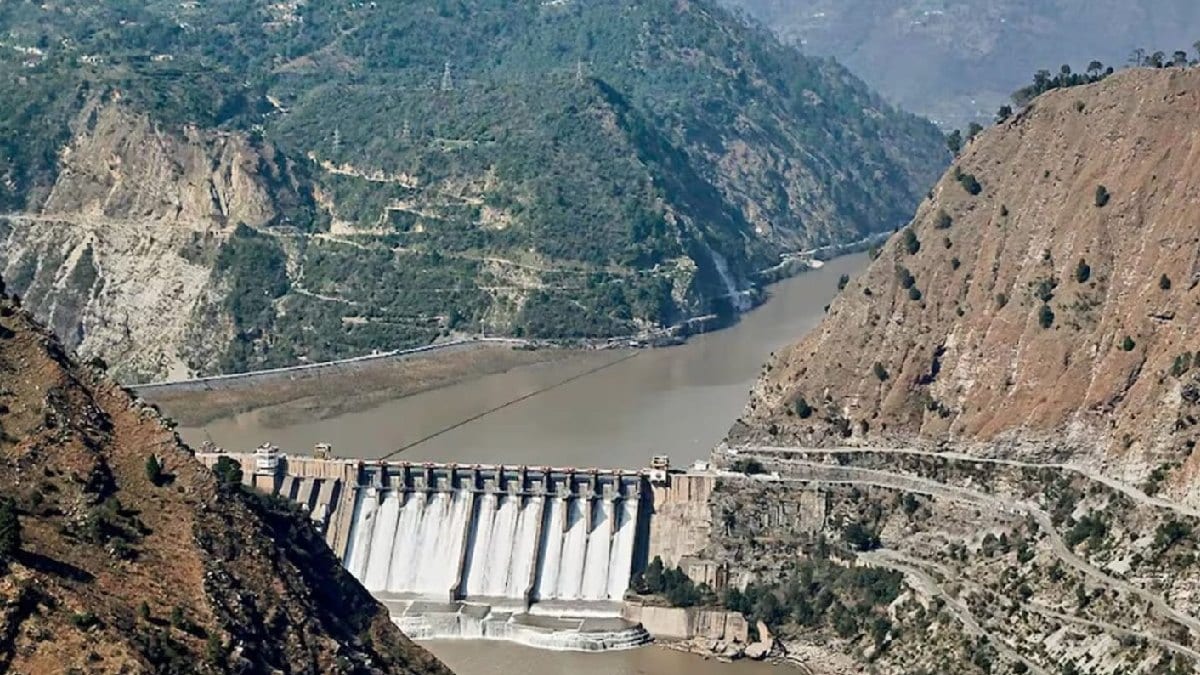
India has rejected a ruling by a Court of Arbitration in The Hague concerning the Indus Waters Treaty, arguing that the tribunal has no jurisdiction over the dispute and cannot rule on India’s sovereign decisions.
The Permanent Court of Arbitration on Monday ruled that the 1960 treaty between India and Pakistan remains binding and that India could not suspend its obligations under the agreement. It also ordered restrictions on construction at the Ratle hydroelectric project in Jammu and Kashmir until a decision by a neutral expert, expected by July 2027.
India, however, does not recognise the proceedings.
Responding to the ruling, India’s Ministry of External Affairs said, “This so-called Court of Arbitration has no jurisdiction whatsoever to pronounce on India’s sovereign decisions.”
“Its pronouncements, now or in the future, will have no effect on India’s actions in connection with the projects being undertaken by India,” it added.
The dispute centres on the treaty’s mechanism for resolving disagreements over the use of the Indus river system. India has argued that Pakistan’s decision to initiate arbitration while a separate Neutral Expert process was underway resulted in parallel proceedings and that the Court of Arbitration was therefore not competent to hear the matter.
The tribunal has rejected India’s position on jurisdiction, maintaining that it has authority under the treaty to adjudicate the dispute.
India suspended the treaty in April 2025, following the Pahalgam attack in Jammu and Kashmir that killed 26 people. New Delhi attributed the attack to Pakistan-based elements, while Islamabad denied involvement.
The latest ruling places the decades-old water-sharing agreement at the centre of a renewed India-Pakistan confrontation. The treaty allocates the waters of the western rivers,Indus, Jhelum and Chenab-primarily to Pakistan, while giving India rights over the eastern rivers.
Pakistan welcomed the tribunal’s interim measures. Its government said it was examining the decision and considering how it could contribute to restoring engagement under the treaty’s “binding legal obligations”.
The immediate dispute also involves India’s Ratle hydropower project and its plans to increase reservoir storage capacity at hydroelectric projects in Jammu and Kashmir. Pakistan has argued that such changes could allow India greater control over river flows.
For India, however, the central issue is whether the arbitration process itself has legal authority over the dispute. New Delhi’s position is that a tribunal whose jurisdiction it does not accept cannot impose restrictions on its projects or decisions.



Comments (0)