
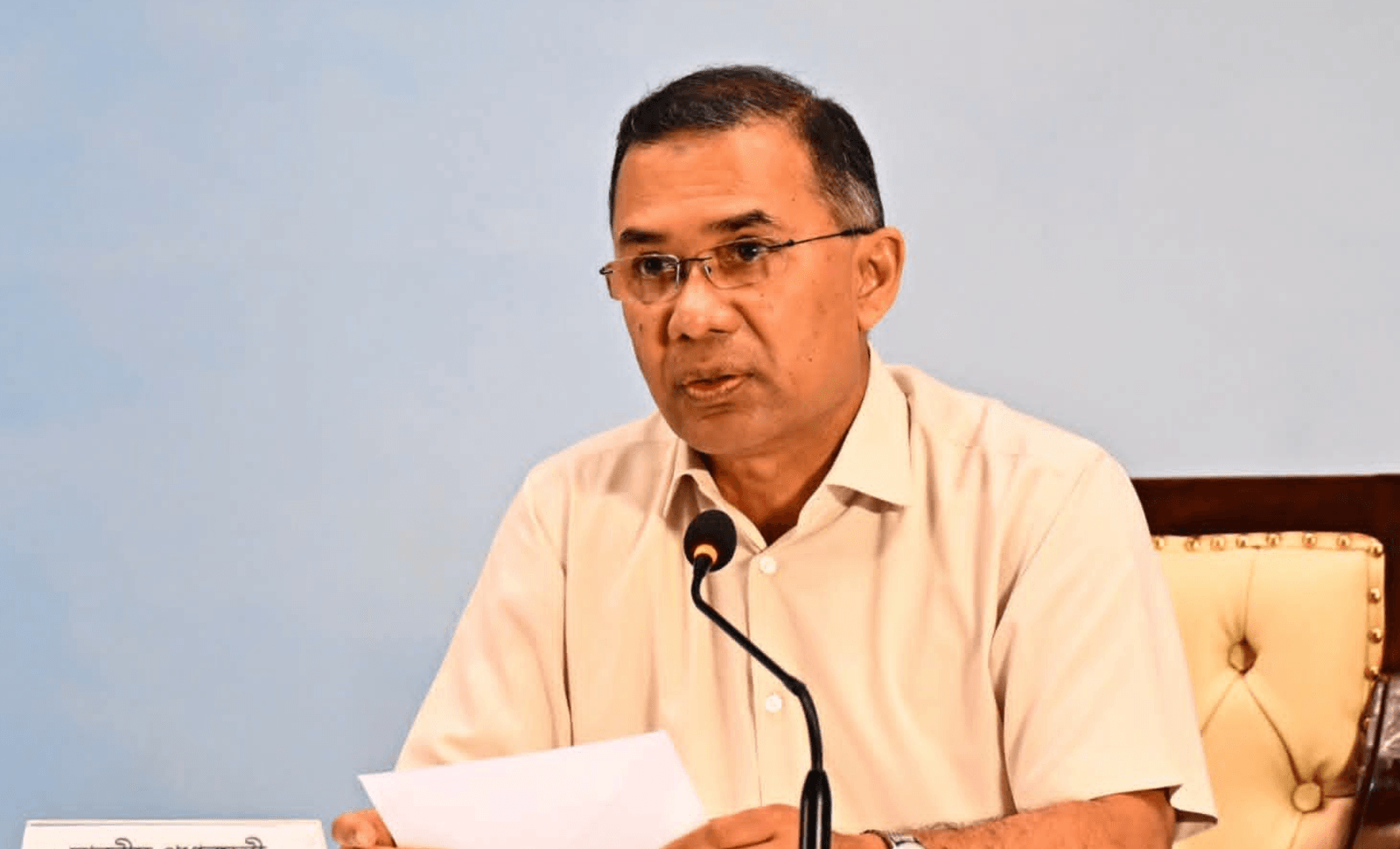
On August 22, Bangladesh's State Minister for Foreign Affairs said that there was "no rush" for Prime Minister Tarique Rahman to visit India and that engagement with New Delhi could not come at the expense of Bangladesh's national interests.
"If we reach an agreement based on our national interests tomorrow, we can go [to India] next week, or the week after," said Humaiun Kobir, Bangladesh's State Minister for Foreign Affairs, according to the state-run news agency BSS. "There is no rush here."
India has invited Rahman for both a bilateral visit and to attend the upcoming BRICS Summit in his capacity as chair of the BIMSTEC grouping.
The now-postponed trip of Bangladesh's Prime Minister to India would have been the first such visit since July 2024, when former Prime Minister Sheikh Hasina fled to India after a mass student uprising rocked the country and brought down her government.
Since then, relations between the two South Asian neighbours have turned sour, particularly during the tenure of the interim government led by Chief Adviser Muhammad Yunus, with Hasina's presence in India being a major irritant.
However, ever since Tarique Rahman, son of Hasina's longtime arch rival, the late former Prime Minister Begum Khaleda Zia, was elected Prime Minister in February, he has tried to bridge the gap between Dhaka and New Delhi.
But tempers flared on August 5, when Sheikh Hasina addressed a virtual press conference in New Delhi. The address angered Dhaka, which said it had "vitiated" the atmosphere and that "a propitious environment needs to be created" before Prime Minister Rahman's visit.
With Dhaka now linking a conducive environment for Rahman's visit to its demand for action on Hasina's extradition, the latest standoff has added further uncertainty to an already strained relationship. As Rahman's visit is perceived as crucial for resetting bilateral ties, political analysts believe that the latest deadlock could send ties between the neighbours further downhill.
Sreeradha Datta, a professor of South Asian studies at OP Jindal Global University, toldThe Decifer, that nobody can question the positive things that Tarique Rahman has said about India, "but he also has a constituency to take care of, especially in the wake of Bangladesh having an opposition after many decades."
"The depth and texture of India-Bangladesh relations cannot be fully captured through trade figures and economic metrics alone," Datta added. "Dhaka's deepening engagement with the US and China, growing defence cooperation with Türkiye, and renewed outreach to Pakistan are only reinforcing the trust deficit that has long beset the neighbours."
According to her, in the last two years, while things haven't been comfortable, it has also shown that India and Bangladesh can survive without each other.
Datta believes that the two neighbours no longer enjoy the erstwhile warmth shared during the Hasina years, but neither side has the luxury of disengagement. "The conditionalities laid down would be seen as an affront in Delhi, while Dhaka does not wish to appear as a weak neighbour intimidated into taking a position," she argued. "This puts bilateral ties in a bind. The impasse needs to be broken, as the alternative is not pretty."
The difficulty, however, goes beyond the immediate question of whether Rahman will travel to New Delhi. His proposed visit was expected to serve as an early signal of whether the BNP government could move beyond the bitter politics of the past two years and establish a working relationship with India. Instead, the dispute over Hasina has followed both governments into what was supposed to be a new chapter, underscoring how difficult it may be for Dhaka and New Delhi to separate their future relationship from the legacy of earlier governments.
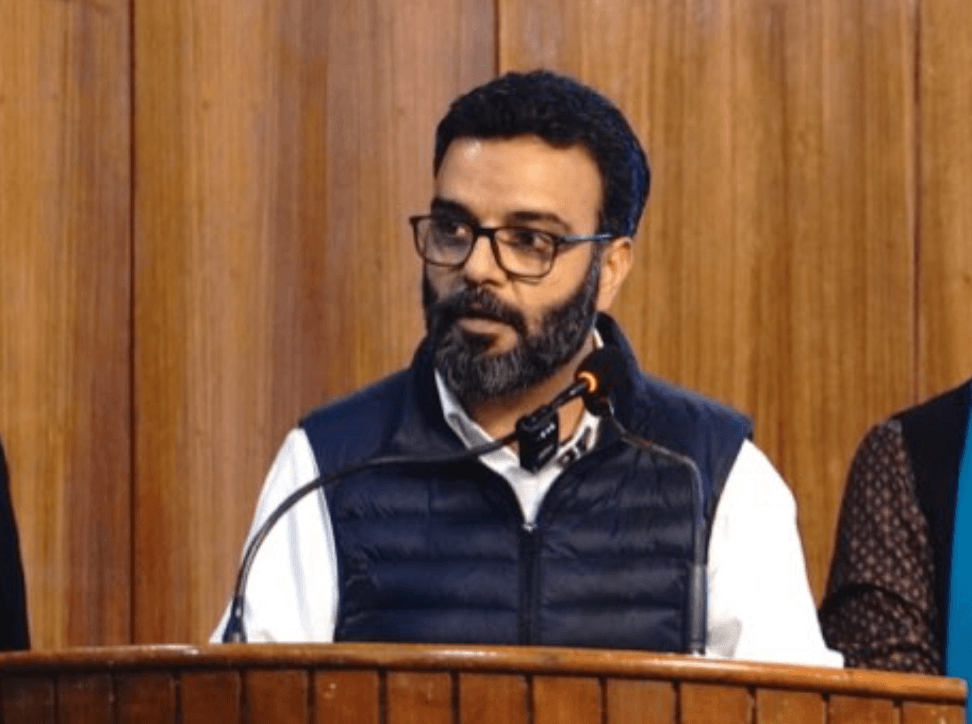
According to Shakil Ahmed, an assistant professor of Government and Politics at Bangladesh's Jahangirnagar University, the postponed visit is significant precisely because it was supposed to be a reset as a first visit by a new prime minister normally carries symbolic value.
“It tells both countries that they are ready to leave the previous chapter behind,” professor Shakil Ahmed told The Decifer. "Instead, the fact that the visit itself has become entangled with Sheikh Hasina shows that neither side has been able to escape the politics of the previous government.”
Since Tarique Rehman took the helm of Bangladesh, he has persistently sought to build closer diplomatic, economic and defence ties with Pakistan and China, two of India’s most sensitive neighbours.
However, Professor Ahmed explained that the crisis has not necessarily put Bangladesh in a position of choosing China or Pakistan over India and the current expansion of Bangladesh’s ties with other south asian countries is due to the “emerging middle class in Bangladesh making trading links with other countries”.
“Its a [strategic] diversification of Bangladesh and it does not necessarily mean it's an anti-India policy,” he observed. “It only becomes so when India leaves Bangladesh with no other perceived option.”
Ahmed believes that Bangladesh is trying to create room for manoeuvre and the more Dhaka feels constrained by India, the more attractive alternative partnerships become.
"For a very short time, Bangladesh has to face its domestic reality that is actually shaping international relations, particularly the regional relations with India,” argued the professor. “In India-Bangladesh relation, The sheep attitude of diplomacy has taken a backseat and the wolf approach is coming forward.”
After the student uprising of 2024, Bangladesh's youth accused India of disproportionately supporting the Hasina government. “They expected that India would support Bangladesh’s state as a whole but the Indian government actually supported the [Hasina] regime,” explained Professor Ahmed. “So, people in Bangladesh are quite dissatisfied with such an attitude. India needs to become pragmatic and deal with the state and not the regime.”
As the anti-India sentiment keeps on brewing in Bangladesh, the professor believes that India needs to give breathing space to Bangladesh’s newly elected. “India needs to understand that the new government [of Bangladesh] has a domestic audience to connect to,” added the Professor. “A few surveys have suggested that India has a more anti-Bangladesh sentiment than the anti-Indian sentiment in Bangladesh.”
Notably, Bangladesh has also shown interest in joining the Mecca agreement, which many political pundits see as a serious blow to strategic policy for New Delhi.
The political science professor agrees that New Delhi cannot expect the privileges of the Hasina era to survive unchanged and that a democratic transition in Bangladesh necessarily changes the political terms of engagement for India.
“India’s understanding of Bangladesh's politics should go beyond partisan politics as India needs to engage politically [with Bangladesh] and not personally,” Professor Ahmed mentioned. “At the same time, Bangladesh’s variety of political parties need to engage with the political spectrum across India.”


Comments (0)