
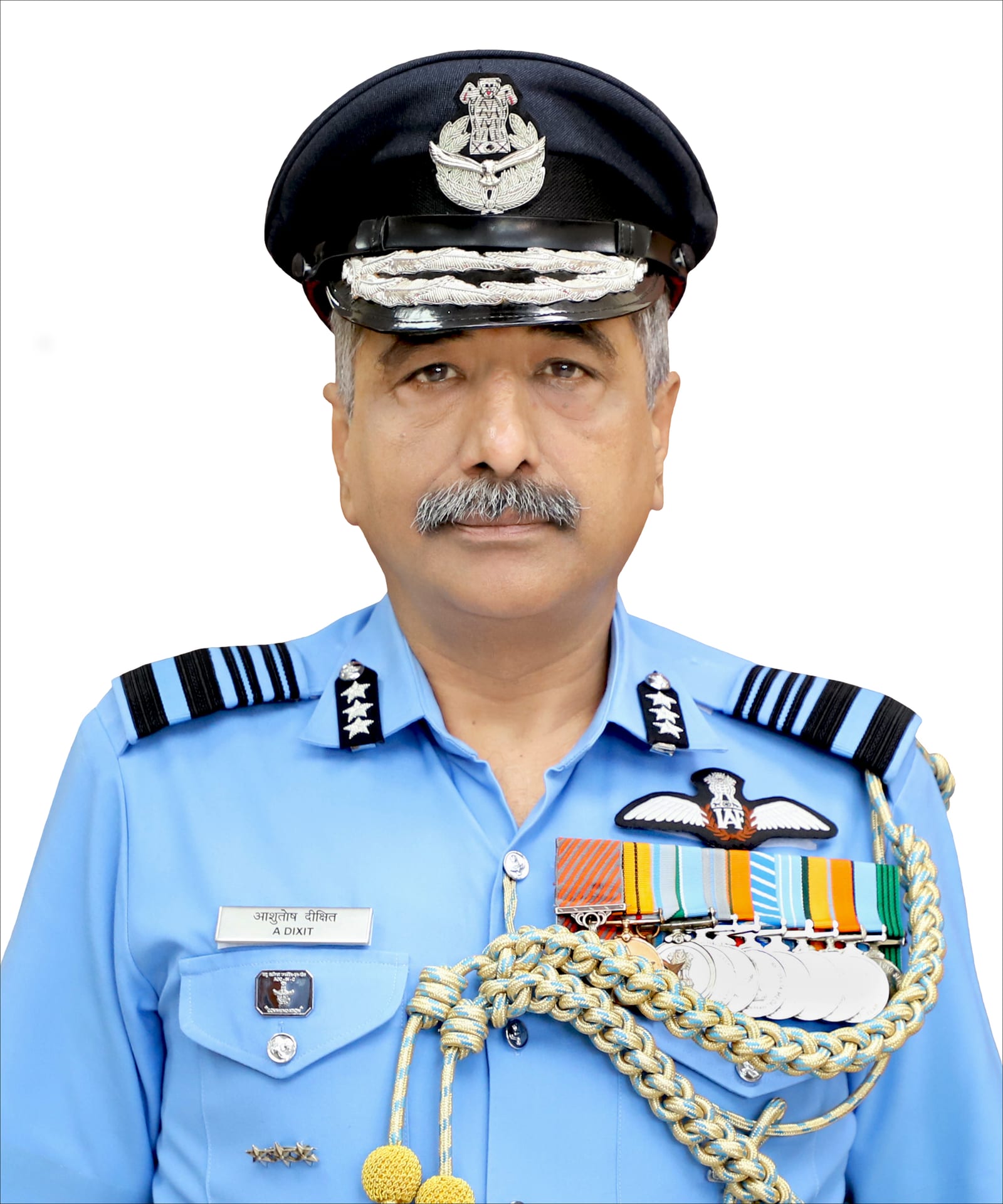
Air Chief Marshal Ashutosh Dixit on Saturday took charge as the 29th Chief of the Air Staff of the Indian Air Force (IAF), succeeding Air Chief Marshal AP Singh, who retired after 42 years of military service.
Dixit, who was serving as the Vice Chief of the Air Staff, was commissioned into the fighter stream of the IAF in December 1986. A fighter pilot, experimental test pilot and qualified flying instructor, the 59-year-old officer has logged more than 3,500 hours of flying experience on various aircraft, including the Mirage-2000, MiG variants, Jaguar and Tejas light combat aircraft.
According to the IAF, Dixit's career spanning four decades has included assignments in operations, flight testing, capability development and joint staff roles. Before becoming Vice Chief of the Air Staff, he served as Chief of Integrated Defence Staff to the Chairman of the Chiefs of Staff Committee and Air Officer Commanding-in-Chief of the Central Air Command.
Dixit has been associated with several military operations, including Operation Safed Sagar during the 1999 Kargil War and Operation Rakshak in Jammu and Kashmir. He served as Chief of Integrated Defence Staff during Operation Sindoor, the four-day military confrontation with Pakistan following the Pahalgam terror attack in 2025.
He has also commanded a Mirage-2000 squadron and a fighter training base in the southern sector, besides holding several senior positions at Air Headquarters.
The IAF said Dixit played an important role in the force's modernisation, including finalising the Jaguar and MiG-27 upgrade projects and completing the initial and final operational clearance activities for the indigenous Light Combat Aircraft (LCA) Mk-1 Tejas.
His appointment comes at a time when the IAF is dealing with a shortage of fighter aircraft and several key modernisation programmes requiring faster implementation.
Among the major projects expected to remain priorities during his tenure are the LCA Mk-1A, LCA Mk-2, multi-role fighter aircraft (MRFA), advanced medium combat aircraft (AMCA) and medium transport aircraft (MTA) programmes.
Comments (0)