
SIR in Delhi and a familiar face caught in it
Welcome to The Decifer's weekly newsletter.
This week: a sitting MP unaccounted for in a voter roll exercise in Delhi, an ensuing parallel crisis in the conflict ridden Manipur, and the supreme court rebuking the Bar Council for trespassing its authority. Here’s what was underneath each of them.
A third front war in Manipur
What began as a conflict between Metis and Kukis in 2023, has now assumed a new form in Manipur. The Naga Kuki-Zo conflict, which started alongside the Meiti Kuki-Zo, has now turned into a parallel crisis in the state.
Human Rights Watch has reported that at least seven people were killed in late August in the clashes between the two communities in the hill areas of Manipur. The total death toll stands at 34, ever since the crisis began in February, over a minor altercation in the Ukhrul district, leading to a protracted crisis over a decades-old territorial dispute.
At its root is Kuki Zo’s push for a separate administration called Kukiland. The Nagas have objected, for they say parts of the territory claimed overlap with their ancestral territorial area.
In May, Naga groups shut down National Highway 2 between Imphal and Nagaland, stopping supplies to Kuki Zo areas, especially North Kangpokpi district. As a result, Kuki Zo groups blocked the movement of goods into Ukhrul district, having a Naga majority. On the intervention of CM. Yunnan Khemchand Singh, it was lifted. However, Kangapokpi remains halted due to ongoing armed Naga group blockades. Food and cooking gas prices have increased as a result of it.
"The Manipur government has failed to stop the escalating ethnic violence in the state," said Elaine Pearson, Asia director at Human Rights Watch. "The authorities need to take urgent and effective steps to end the killings, protect communities, and ensure justice for abuses.”
This marks the third year of the main conflict since May 2023, with a death toll of 260 and 60000 displaced people.
In Manipur, there is an ensuing split into three armed self-patrolled zones. The buffer lines between them are hardening, which do not hint at a pause. A new state with limited political leeway has focused on short-term measures — the reopening of highways, the lift of blockades, while the Centre’s silence leaves the conflict in limbo, without a firm resolution.
The core issue remains the lack of accountability. What has shifted is the geographical nature of the crisis. It was previously a hill valley divide, but now it cuts directly through the hills.
SIR in Delhi and a familiar face caught in it
Something surprising came out this week in the national capital. Nearly a third of the total 1.45 crore registered voters — 47.7 lakh names — were excluded from the draft electoral rolls after the SIR was published on 31st August by the Chief Electoral Officer. They were listed as uncollectible, such as Absent, Shifted, Dead, Duplicate and others. The voters have time until 30 September to file objections, and they will be disposed of by 30 October. The final list will be published on November 4, 2026. It witnessed a war of words between the AAP, BJP and the Congress, one side alleging the politicization of the exercise. They claim that it would disproportionately impact the migrant and seasonal workers, because of its cumbersome documentation and verification requirements. The other side, on the other hand, legitimizes its necessity, to protect the integrity of the vote, to ensure the cleanup of the rolls.
“The names of 47 lake voters are missing. The Government of India is unnecessarily worried about the population. Through SIR, the Election Commission will reduce our country's population from 140 crore to 50 crore,” Arvind Kejriwal contended in a post shared on X.
"If Kejriwal believes that any genuine and eligible voter has been left out despite submitting the form, he should present such cases before the EC instead of leveling allegations," replied Harish Malhotra of the Delhi BJP.
Delhi has one of the largest floating and migrant populations, including students and workers, who often change addresses without updating their registration. This means house-to-house verification will likely miss more people compared to a state with a stable population flow.
Exclusion of numbers by constituency, with some seats losing more names than others, presents a tension between administrative cleanup or selective disenfranchisement.
Raghav Chadha, who quit the AAP for the BJP in April, finds himself shifted in the Punjab’s SIR draft roll, despite being registered in Mohali. He is not listed in the Delhi rolls either, which he represented as an MLA before becoming the Rajya Sabha MP.
If a Rajya Sabha MP with a political identity is missing from the electoral rolls, it means a far more consequential impact for an ordinary citizen who does not have the resources to challenge it.
A council corrected: The Supreme Court reins in the BCI
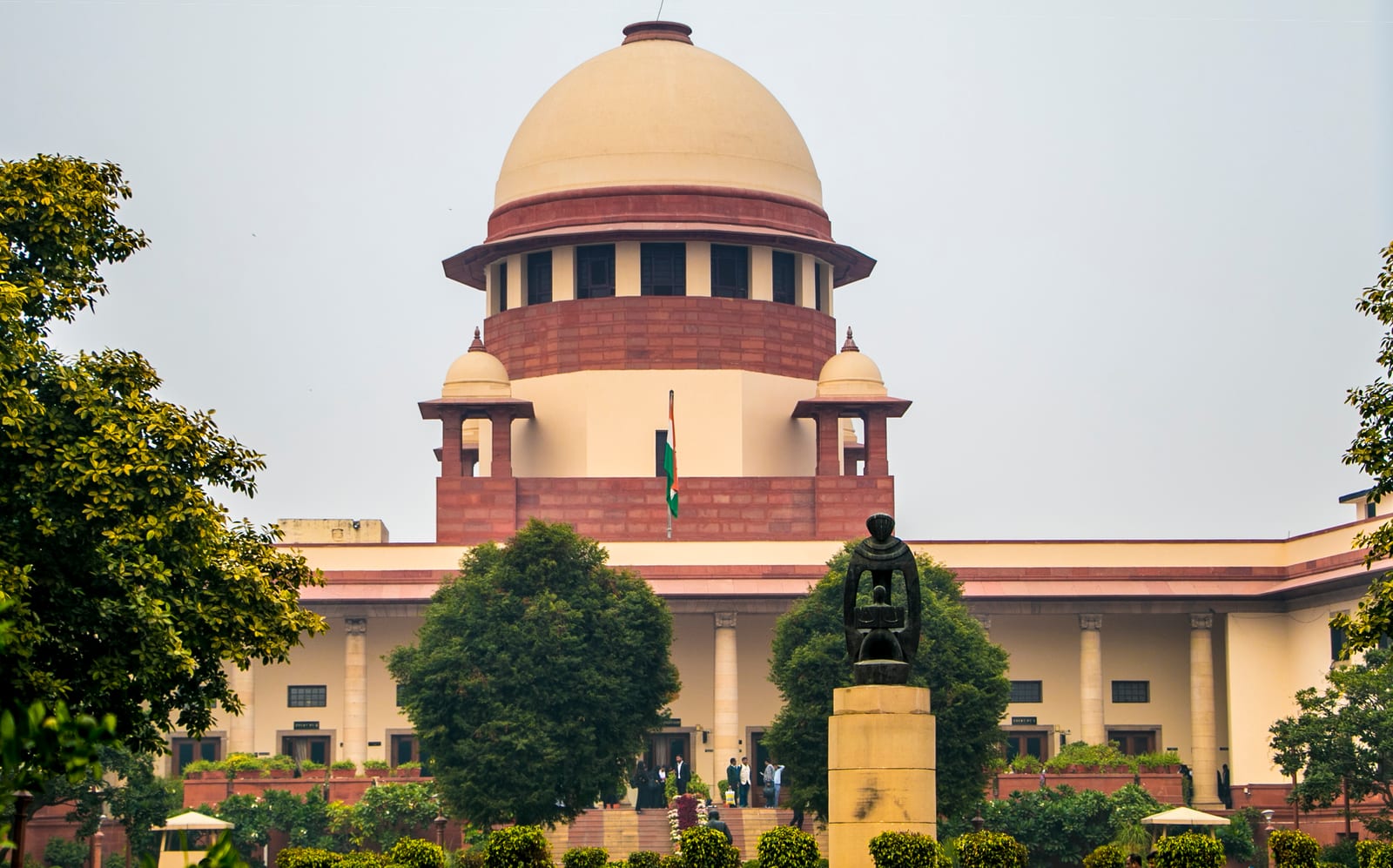
This week, a Supreme Court bench led by Chief Justice Surya Kant, along with Justices Joymalya Bagchi and V Mohana, ruled that the Bar council of India and state bar councils have no statutory powers to discipline law students. It was a sharp rebuke arising directly from the NALSAR controversy. It added that the BCI’s role kicks in under the Advocates Act, 1961, only when a law student starts as an advocate, and that the disciplinary authority rests with the universities under the institution’s own regulations.
The controversy grew over the NALSAR University of Law students who objected to CPI’s Kant’s proposed participation in the convocation. Consequently, the BCI reacted by directing state bar councils to not register the 2026 graduating batch, threatening their careers over the dissent.
The court rejected the BCI’s notifications, although the council had already taken them back owing to the criticism. Two former Nasar graduates, filing the petition, argued that the letters had created a chilling effect on the freedom of speech and expression of students, and that it was a brazen institutional overreach on BCI’s part.
It leaves a fundamental lesson: a body meant to regulate standards for legal education trespassed its institutional jurisdiction to discipline students for dissent, and the court differentiated between prescribing educational standards and punishing students, leaving the latter to the universities.
While it clarified on the role of the BCI, yet, it leaves a larger question unanswered'— how far are institutional regulations justified in silencing dissent, what distinguishes between genuine criticism and offense. It leaves it to the arbitrary discretion of the universities to decide, leaving the students with little protection in the event of genuine dissent.
Feature photograph by Subhashish Panigrahi