
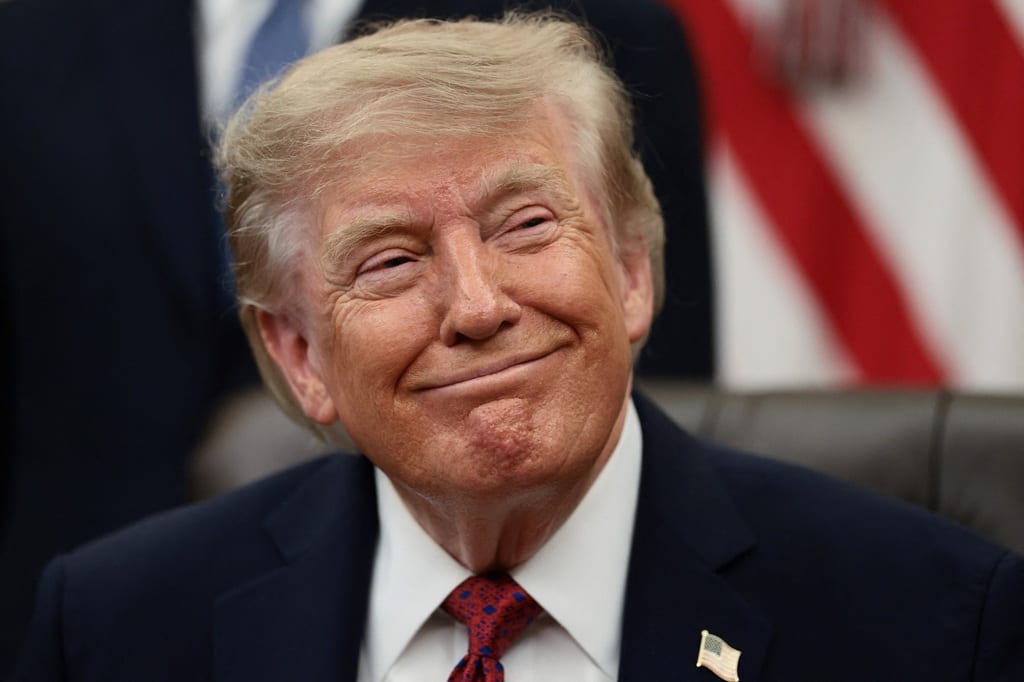
Saudi Crown Prince Mohammed bin Salman urged US President Donald Trump to launch strikes against Yemen’s Iran-aligned Houthi group during two phone calls on Thursday, but Trump rejected the request, Axios reported, citing two US officials.
The report said the Trump administration does not currently intend to take direct military action against the Houthis, despite growing concern in Washington over the rapidly escalating conflict in Yemen.
The United States is instead stepping up support for Saudi Arabia while seeking to avoid direct military involvement in Yemen, according to Axios.
US Central Command commander Admiral Brad Cooper travelled to Saudi Arabia on Thursday for urgent coordination talks, the report said.
US military and civilian officials have also told their Saudi counterparts in recent weeks that Trump’s directive is to keep US forces focused on Iran and on safeguarding the Strait of Hormuz, while avoiding the opening of another military front, Axios reported.
The developments came as the Houthis seized control of Yemen’s Red Sea port city of Mocha on Thursday and advanced along the coast towards the strategic Hanish islands, according to Yemeni government military sources.
The advance has increased concerns over the Bab el-Mandeb Strait, the southern gateway to the Red Sea and a critical international shipping route. Yemeni government sources said the Houthis had gained further leverage over the waterway and reached the Hanish islands.
Control of the Bab el-Mandeb could give Iran, which backs the Houthis, greater leverage in its conflict with the United States by threatening another major maritime corridor. Any disruption could also put further pressure on global oil markets.
Saudi Arabia has relied more heavily on the Red Sea shipping route after the Iran conflict effectively disrupted traffic through the Strait of Hormuz, through which around a fifth of global oil supplies previously passed.
Yemeni government forces and their allies are moving south along the Red Sea coast towards Dhubab, near the Bab el-Mandeb Strait and opposite Perim Island, according to military sources. Control of Dhubab and Perim would be important for securing the approaches to the waterway.
UN Special Envoy for Yemen Hans Grundberg told the UN Security Council on Thursday that the conflict had entered “a new and more dangerous phase”. He said the Houthi capture of Mocha had given the group a direct presence near one of the world’s most important maritime chokepoints and raised serious concerns over freedom of navigation.
US representative Jenifer Neidhart de Ortiz accused the Houthis of acting as “agents and tools of Iran”, saying the escalation was unacceptable.
Iran’s foreign ministry said the Yemen conflict could not be resolved through a blockade or military action against the Houthis and called for dialogue.
Yemeni government, Iranian and regional sources told Reuters that the Houthi advance along the coast this week was carried out with direct guidance from Iran’s Islamic Revolutionary Guard Corps.
Houthi spokesperson Mohammed Abdulsalam said the group’s operations were defensive and would end once attacks on Yemen stopped.
The latest escalation comes as Trump said on Thursday that he expected the war with Iran to end after the US midterm elections, adding further pressure on Washington to prevent the Yemen conflict from developing into another direct US military confrontation.




Comments (0)