
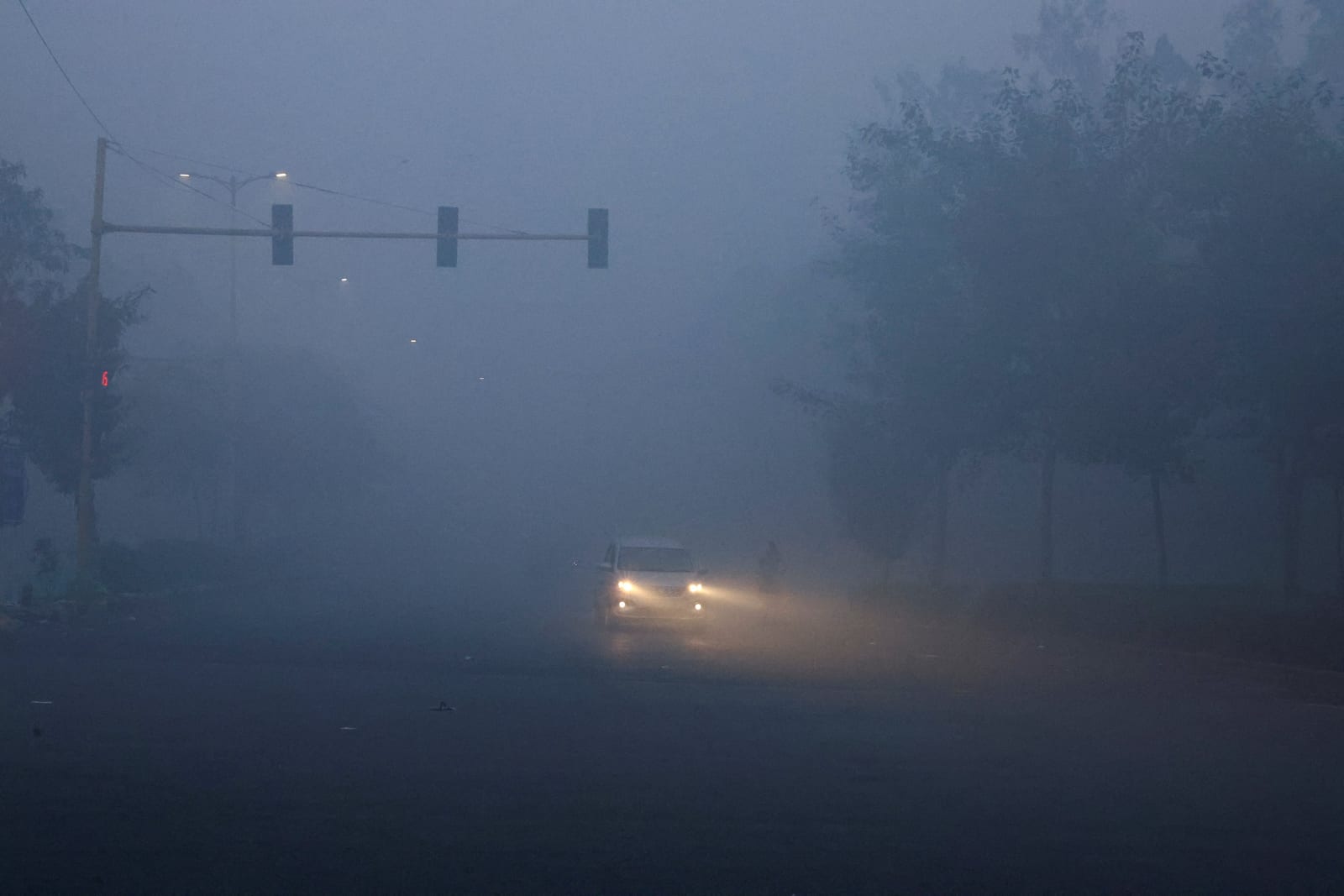
Delhi’s air pollution levels surged to alarming levels on Diwali night, with PM2.5 concentrations reaching 3,744 micrograms per cubic metre, more than 60 times the national 24-hour safety standard of 60 µg/m³, according to data released by the Delhi Pollution Control Committee (DPCC) on Monday.
The hourly pollution readings, which had been missing from the official records during the night of November 8, were released by the DPCC around 8 pm on Monday.
The highest concentration was recorded at Mundka at 2 am on November 9. JNU recorded 3,023 µg/m³ at 4 am, while NSUT’s West Campus registered 3,008 µg/m³ at 5 am. Mandir Marg recorded 2,908 µg/m³ at 3 am, followed by Nehru Nagar at 2,808 and Wazirpur at 2,721 µg/m³.
At least 11 monitoring stations recorded PM2.5 levels above 2,000 µg/m³.
According to Hindustan Times, all 125 station-hour readings missing from the Central Pollution Control Board's (CPCB) records were above 1,000 µg/m³ in the DPCC data. Where readings were available in both datasets, the figures matched.
Earlier, several monitoring stations had stopped reporting PM2.5 levels as pollution intensified during the night. At 1 am, 36 of Delhi's 59 monitoring stations had no PM2.5 readings in the CPCB records.
The missing data also affected the official air quality assessment. According to HT's estimates, using the released readings and the CPCB's calculation method, Delhi's AQI for the 24 hours up to 9 am on November 9 would have been around 384, compared with the official figure of 370. The estimated 4 pm AQI was around 360 against the reported 344.
The AQI scale is capped at 500, meaning extremely high pollution readings have a limited impact on the final index.


Comments (0)